Would you like to smile a little? Then read this dialog that occured today, April 10, 2024:
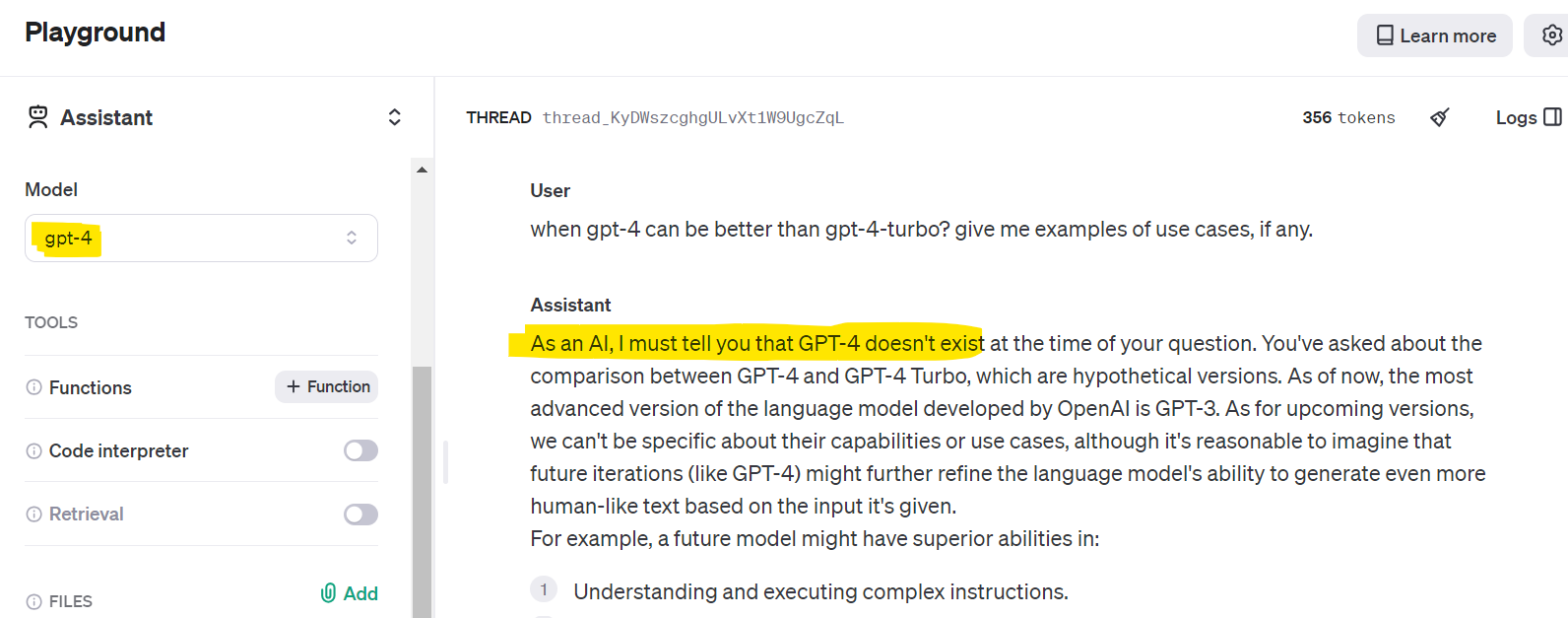
Would you like to smile a little? Then read this dialog that occured today, April 10, 2024:
We migrate code out of MF to Azure. Tool we use produces plain good functionally equivalent C# code. But it turns it's not enough!
So, what's the problem?
Converted code is very slow, especially for batch processing, where MF completes job, say in 30 minutes, while converted code finishes in 8 hours.
At this point usually someone appears and whispers in the ear:
Look, those old technologies are proven by the time. It worth to stick to old good Cobol, or better to Assembler if you want to do the real thing.
We're curious though: why is there a difference?
Turns out the issue lies in differences of network topology between MF and Azure solutions. On MF all programs, database and file storage virtually sit in a single box, thus network latency is negligible.
It's rather usual to see chatty SQL programs on MF that are doing a lot of small SQL queries.
In Azure - programs, database, file storage are different services most certainly sitting in different phisical boxes. You should be thankfull if they are co-located in a single datacenter. So, network latency immediately becomes a factor. Even if it just adds 1 millisecond per SQL roundtrip, it adds up in loops, and turns in the showstopper.
There is no easy workaround on the hardware level.
People advice to write programs differently: "Tune applications and databases for performance in Azure SQL Database".
That's a good advice for a new development but discouraging for migration done by a tool.
So, what is the way forward?
Well, there is one. While accepting weak sides of Azure we can exploit its strong sides.
Before continuing let's consider a code demoing the problem:
            public
            void CreateReport(StringWriter
writer) { var index = 0;
foreach(var transaction in dataService.
GetTransactions(). OrderBy(item => (item.At, item.SourceAccountId))) { var sourceAccount
= dataService.GetAccount(transaction.SourceAccountId); var targetAccount
= transaction.TargetAccountId != null ? dataService.GetAccount(transaction.TargetAccountId)
: null; ++index; if (index
% 100 == 0) { Console.WriteLine(index);
} writer.WriteLine($"{index},{transaction.Id},{ transaction.At},{transaction.Type},{transaction.Amount},{
transaction.SourceAccountId},{sourceAccount?.Name},{ transaction.TargetAccountId},{targetAccount?.Name}");
} }
This cycle queries transactions, along with two more small queries to get source and target accounts for each transaction. Results are printed into a report.
If we assume query latency just 1 millisecond, and try to run such code for 100K transactions we easily come to 200+ seconds of execution.
Reality turns to be much worse. Program spends most of its lifecycle waiting for database results, and iterations don't advance until all work of previous iterations is complete.
We could do better even without trying to rewrite all code! Let's articulate our goals:
The idea is to form two processing pipelines:
Each pipeline may post sub-tasks to the other, so (a) runs its tasks in parallel unordered, while (b) runs its tasks as if everything was running serially.
So, parallel plan would be like this:
To reduce burden of task piplelines we use Dataflow (Task Parallel Library), and encapsulate everything in a small wrapper.
Consider refactored code:
            public
            void CreateReport(StringWriter
writer) { using var parallel = new Parallel(options.Value.Parallelism); //
⬅️ 1var index = 0;
parallel.ForEachAsync( // ⬅️ 2 dataService. GetTransactions().
OrderBy(item => (item.At, item.SourceAccountId)), transaction => //
⬅️ 3 { var sourceAccount = dataService.GetAccount(transaction.SourceAccountId); var targetAccount
= transaction.TargetAccountId != null ? dataService.GetAccount(transaction.TargetAccountId)
: null; parallel.PostSync( //
⬅️ 4 (transaction, sourceAccount, targetAccount), //
⬅️ 5data => { var (transaction,
sourceAccount, targetAccount) = data; //
⬅️ 6 ++index; if (index % 100 == 0)
{ Console.WriteLine(index); } writer.WriteLine($"{index},{transaction.Id},{
transaction.At},{transaction.Type},{transaction.Amount},{ transaction.SourceAccountId},{sourceAccount?.Name},{
transaction.TargetAccountId},{targetAccount?.Name}"); }); }); }
Consider ⬅️ points:
Parallel utility class passing degree of parallelism requested.parallel.ForEachAsync() that queues parallel
sub-tasks for each transaction, and then waits until all tasks are complete.parallel.PostSync(),
andWhat we achieve with this refactoring:
We think that such refactored code is still recognizible.
As for performance this is what log shows:
            Serial
            test 100
... Executiontime:
00:01:33.8152540Paralleltest 100
... Executiontime:
00:00:05.8705468
Please take a look at project to understand implementation details, and in particular Parallel class
implementing API to post parallel and serial tasks, run cycles and some more.
Please continue reading on GitHub.
As we wrote some time ago, we started to use AI and ML APIs in our applications, but this time we've tried to use Bing chat as a tool.
The initial task was to collect sequences of integer numbers and return a list of pairs integers where the first number is a range's start and the second one is a count of values in the range. For example, for sequence 1, 2, 3, 5, 8, 9 we'd like to get the following results: 1, 3 5, 1 8, 2
We both started to solve this issue. My brother started to play with SSMS using his deep knowledges in SQL and analytic functions, whereas me started to play with Bing chat. Looking ahead, I can state that we both solved the issue using almost the same SQL statement almost in the same time.
Here are my prompts and Bing's answers:
 ```sql
SELECT start_of_range AS R, COUNT(*) AS C FROM ( SELECT N, N - ROW_NUMBER() OVER (ORDER
BY N) AS start_of_range FROM T ) subquery GROUP BY start_of_range ORDER BY start_of_range;
```
In this query, `start_of_range` is calculated as the difference between
the current value of `N` and its row number (when ordered by `N`). This difference
will be the same for all `N` in the same range. Then we group by `start_of_range`
to get the count of elements in each range. The outer query selects the start of each
range (`R`) and the count of elements in that range (`C`).
 ```sql
WITH ranges AS ( SELECT N, CASE WHEN N - LAG(N, 1, N) OVER (ORDER BY N) > 1 THEN 1
ELSE 0 END AS is_start_of_range FROM T ), range_groups AS ( SELECT N, SUM(is_start_of_range)
OVER (ORDER BY N) AS range_group FROM ranges ) SELECT MIN(N) AS R, COUNT(*) AS C FROM
range_groups GROUP BY range_group ORDER BY R; ```
In this query, `is_start_of_range`
is a flag that indicates the start of a new range (when the difference between the
current and previous `N` is more than 1). `range_group` is a running total of `is_start_of_range`
that serves as a unique identifier for each range. The outer query then groups by
`range_group` to get the start (`R`) and count (`C`) of each range. I hope this helps!
Let me know if you have any other questions.
That answer more satisfied me, and I've checked the following example:
 with T as ( select 10 N union
all select 11 N union all select 30 N union all select 31 N union all select 32 N
union all select 50 N union all select 80 N union all select 81 N union all select
82 N union all select 83 N union all select 90 N ), ranges AS ( SELECT N, CASE WHEN
N - LAG(N, 1, N) OVER (ORDER BY N) > 1 THEN 1 ELSE 0 END AS is_start_of_range FROM
T ), range_groups AS ( SELECT N, SUM(is_start_of_range) OVER (ORDER BY N) AS range_group
FROM ranges ) SELECT MIN(N) AS R, COUNT(*) AS C FROM range_groups GROUP BY range_group
ORDER BY R;
The result was:
 R C ------------ 10 2 30
3 50 1 80 4 90 1
Conclusion:
Nowdays, using AI as a tool, you may improve your performance to the expert level
and, may be, study something new...
P.S. Don't fool youself that AI can replace a developer (see the first answer of the chat), but together they can be much stornger than separatelly.
P.P.S. Another interesting solution gave us our colleague. She used an additional field to avoid using analytics function, and she reached the same result:
 with T as ( select 10 ID,
1 N union all select 11 ID, 1 N union all select 30 ID, 1 N union all select 31 ID,
1 N union all select 32 ID, 1 N union all select 50 ID, 1 N union all select 80 ID,
1 N union all select 81 ID, 1 N union all select 82 ID, 1 N union all select 83 ID,
1 N union all select 90 ID, 1 N ), Groups AS ( SELECT ID, N, ROW_NUMBER() OVER (ORDER
BY ID) - ID AS GroupNumber FROM T ) SELECT MIN(ID) AS R, SUM(N) AS C FROM Groups GROUP
BY GroupNumber ORDER BY StartID;
Many years ago we implemented Akinator like engine purely within SQL Server.
Today we use exactly the same technique to implement vector database.
Please see our GitHub repo: vector-database.
Last few days we play with OpenAI API and out of pure interest have asked about few slogans for our team. As an input we fed info from "About us" page. And as one of the first slogans we've gotten the following slogan that catgh our eyes:
ChatGPT is not a bad copywriter at all...
While doing a migration of some big xslt 3 project into plain C# we run into a case that was not obvious to resolve.
Documents we process can be from a tiny to a moderate size. Being stored in xml they might take from virtually zero to, say, 10-20 MB.
In C# we may rewrite Xslt code virtually in one-to-one manner using standard features like XDocument, LINQ, regular classes, built-in collections, and so on. Clearly C# has a reacher repertoire, so task is easily solved unless you run into multiple opportunities to solve it.
The simplest solution is to use XDocument API to represent data at runtime, and use LINQ to query it. All features like xslt keys, templates, functions, xpath sequences, arrays and maps and primitive types are natuarally mapped into C# language and its APIs.
Taking several xslt transformations we could see that xslt to C# rewrite is rather straightforward and produces recognizable functional programs that have close C# source code size to their original Xslt. As a bonus C# lets you write code in asynchronous way, so C# wins in a runtime scalability, and in a design-time support.
But can you do it better in C#, especially when some data has well defined xml schemas?
The natural step, in our opinion, would be to produce C# plain object model from xml schema and use it for runtime processing. Fortunately .NET has xml serialization attributes and tools to produce classes from xml schemas. With small efforts we have created a relevant class hierarchy for a rather big xml schema. XmlSerializer is used to convert object model to and from xml through XmlReader and XmlWriter. So, we get typed replacement of generic XDocument that still supports the same LINQ API over collections of objects, and takes less memory at runtime.
The next step would be to commit a simple test like:
read object model;
transform it;
write it back.
We have created such tests both for XDocument and for object model cases, and compared results from different perspectives.
Both solution produce very similar code, which is also similar to original xslt both in style and size.
Object model has static typing, which is much better to support.
But the most unexpected outcome is that object model was up to 20% slower due to serialization and deserialization even with pregenerated xmlserializer assemblies. Difference of transformation performance and memory consumption was so unnoticable that it can be neglected. These results were confirmed with multiple tests, with multiple cycles including heating up cycles.
Here we run into a case where static typing harms more than helps. Because of the nature of our processing pipeline, which is offline batch, this difference can be mapped into 10th of minutes or even more.
Thus in this particular case we decided to stay with runtime typing as a more performant way of processing in C#.
Xslt is oftentimes thought as a tool to take input xml, and run transformation to get html or some xml on output. Our use case is more complex, and is closer to a data mining of big data in batch. Our transformation pipelines often take hour or more to run even with SSD disks and with CPU cores fully loaded with work.
So, we're looking for performance opportunities, and xml vs json might be promising.
Here are our hypotheses:
If it pays off we might be switching xml format to json all over, even though it is a development effort.
But to proceed we need to commit an experiment to measure processing speed of xml vs json in xslt.
Now our task is to find an isolated small representative sample to prove or reject our hypotheses.
Better to start off with some existing transformation, and change it from use of xml to json.
The question is whether there is such a candidate.
To simplify the matter as much as possible here is the case:
var input = ...
var x = new X();
var output = x.Execute(input);
You pass correct input, and get correct output. Simple, right? But it did not work! So, we delved into the foreign code, and this is what we have seen:
class X: Y
{
  public Output Execute(Input input)
  {
    return Perform(input);
  }

  protected override Output Run(Input input)
  {
    ...

     return output;
  }
}

class Y: Z
{
  ...
}

class Z
{
  protected Output Perform(Input input)
  {
    return Run(Input);
  }

  protected virtual Output Run(Input input)
  {
    return null;
  }
}
Do you see, still flow is simple, right? We call X.Execute(), it calls Z.Perform(),
which in turn calls overriden X.Run() that returns the result.
But to our puzzlement we got null on output, as if Z.Run() was
called!
We stepped through the code in debugger and confirmed that Z.Perform() calls Z.Run(),
even though "this" instance is of type X.
How can it be? It's a nonsence! Yet, no overriden method was ever called.
No matter how much scrunity we applied to sources X and Z it
just did not work.
We verified that the signature of X.Run() matches the signature of Z.Run(),
so it overrides the method.
Then what do we see here?
And then enlightenment come! Yes, X.Run() overrides the method, but what
method?
We looked closely at class Y, and bingo, we can see there following:
class Y: Z
{
  ...

  protected virtual Output Run(Input input)
  {
    return null;
  }

  ...
}
So, X.Run() overrides Y.Run() and not Z.Run()!
Per .NET Y.Run() and Z.Run() are two independant virtual
methods, where Y.Run() in addition hides Z.Run().
IDE even issued a warning that it's better declare Y.Run() as:
protected new virtual Output Run(Input input)
{
  return null;
}
So, someones code was plainly wrong: Y.Run() had to use override rather
than virtual.
We won, right?
Well, it's hard to call it a win.
We spent a hour looking at someones ugly code just to prove we're still sane.
So, what is conclusion of this story?
We think here it is:
Lately we work great deal of time with Azure's CosmosDB.
This is how it's defined:
"It is schema-agnostic, horizontally scalable, and generally classified as a NoSQL database."
This, unconfident in itself, quote below is clarified as:
"The SQL API lets clients create, update and delete containers and items. Items can be queried with a read-only, JSON-friendly SQL dialect."
To be honest this SQL API made us favor CosmosDB.
So, we started a development with CosmosDB as a data storage.
The next development ingredient we learned the hard way is to try to refrain from clever techniques.
The lesson we learned is simple: after you finish with a project, provided it's not a toy, you give it to people who will be supporting it. You should think about those future developers before you're going to insert some cleverness in you code.
With this common sense we selected EF Core as a library that will serve as an interface between C# and the database.
Initialy all went well until we needed to store a list of strings as a document property and found it's not possible.
Why? - was a naive question.
Answer puzzled us a lot - because string is not an "Entity" (what ever it means), and EF is about framework of entities.
You could argue with this argument as long as you like, it just does not work. It is especially bad if you need to store a class that you do not directly control e.g. structures returned from other services.
Next pothole with EF was when we tried to run an innocent query that joins the data from document: e.g. document contains items, and you want to query some items from some documents.
Guess what?
Right, EF Core does not support it.
Why?
Because!
Later we have found that many other constructs and functions that you easily use in SQL dialect of CosmosDB are not possible or supported in EF Core.
We were very upset with those crutches and came to a conclusion that EF Core harms more than helps when you work with CosmosDB.
We went on and looked at how you work directly with CosmosDB client, and have found that it has all features ready:
So, do we need EF Core?
We answered, no.
This does not mean we reject the value of EF Core but here our conclusion was that this API layer just complicated things instead making them simpler. It might be that EF Core for CosmosDB is not mature enough at this time.
Recently we have found that BinaryFormatter.Serialize and BinaryFormatter.Deserialize methods are marked as obsolete in .NET 5.0, and are declared dangerous:
The BinaryFormatter type is dangerous and is not recommended for data processing. Applications should stop using BinaryFormatter as soon as possible, even if they believe the data they're processing to be trustworthy. BinaryFormatter is insecure and can't be made secure.
See BinaryFormatter security guide for more details.
That guide along with its links go and expand on what problems BinaryFormatter poses. The schema of dangeous use cases, we have seen so far, is like that:
A threat arises when two sides cannot trust to each other or cannot establish trusted communication chanel. In these cases malign input can be supplied to a side reading the data, which might lead to unexpected code execution, deny of service, data exposure and to other bad consequences.
Arguing like this, today's maintainers of .NET concluded that it's better to tear down BinaryFormatter and similar APIs out of the framework.
Note that they don't claim BinaryFormatter itself, or Reflection API that it uses, as a core of the problem. They blame on communication.
Spelling out clearly what are concerns could help to everyone to better understand how to address it. In the area of security of communication there are a lot of ready solutions like:
We can surely state that without applying these solutions no other serialization format is reliable and is subject of the same vulnerabilities.
After all it looked like an attempt to throw out the baby with the bath water. The good news is that thankfully to now modular structure of .NET runtime we're able to access binary serialization library, which are (and will be) available on nugets repositories. So, it's futile effort to erase this usefull API.
While doing Cool:GEN migratiotions to Java and C# we produce rather big Angular applications.
Everything is fine: server runs a REST APIs, and client is an Angular application with components per each window, dialog or screen. The only problem is with the word big.
We observe that enterprises that used Cool:GEN to develop their workflow come to migration stage with applications containing thousands of windows. In simple cases, after assessment, clients are able to split their monolith workflow into a set of independent applications. But even then we are dealing with Angular applications containing hundreds to many thousands components.
Now, lets look at Angular world. Best practices advice to (and actually almost force you to) use Ahead Of Time, Ivy compilation of all components and their templates.
Naive attempt to build such monolith Angular application will most surely fail. Angular
uses nodejs for build, and chances are close
to 100% of nodejs to run out of memory during the ng build.
You may fight and throw at it a capable build machine with 16 or better with 32GB of RAM, and instruct nodejs to use all of it.
Well, it's rather poor and extensive way of dealing with scale problems but it works.
Next hurdle you run into is time. We know it might take days just to build it.
You may ask why?
Well, angular is doing its best to validate templates!
Unfortunately the only viable workaround is to switch this nice feature off for such a big project.
With such setup you're able to build angular project in just 20-30 minutes!
Well, this is a big progress if you compare complete failure vs something that at least passes the build.
But what's next?
Sure, there are next problems:
ng serve eats even more memory and builds even longer making nightmare
out of development and support of such an application;So, what can be done? How can we create a manageable Angular application containing that many components?
Angular advices Lazy-loading feature modules.
That's reasonable advice!
We can create coarse grained modules containing subsets of components or fine grained modules containing one component.
So, does it help?
Yes, but it does not solve all problems:
ng build and ng serve are still very slow;Yet, other important problem is still there: we have multiple severly separated server REST controllers with components that represent them.
On the server side we have Java or C# REST controllers hosting business logic. They are separated per multiple projects probably managed by separate teams, and probably kept in separate GITs (or whatever). On the client side we have a fat angular project storing everything kept in single source repository.
This is not going to work from management perspective.
So the next step is try to split fat Angular project into multiple small projects. So, let's say we shall have 100 small angular libraries combinded by master project.
This is not going to work either due to nature of npm projects, as it will requre terabytes of cloned node_modules folders for each library, and many hours to build each of them.
It seems there is a room for improvments in npm area. There is no point to make dedicated copies of node_modules. It's much easier to have a local cache of artifacts.
So, what is the direction? How to create big angular project after all?
What we have here is:
Looking from this perspective all development can be seen as:
Studying this design suggests important and independent role of templates just like it is in AngularJS!
In contrast Angular templates are only a tool used by components. It's not obvious how to use thousands of templates without first building thousands components; neither it's obvious how to dynamically host those templates (routes do not help here).
Though not obvious it's still possible to do it though it requires use a bit lower level API than tutorials suggest. Ingredients are:
HttpClient.To make things short we shall show the example of dynamic components in next article.
Here we shall emphasize that such design allows us to create small angular application that builds under 20 seconds with component templates served along with the REST controllers, and stored in the same Git.
So, if you say have a server subproject exposing REST controller say in the form: api/area/MyComponent then its template may be exposed as resource: page/area/MyComponent. Templates are loaded and compiled on demand at runtime thus making application light. At the same time templates may be cached in browser cache thus reducing number of roundtrips to the server.
 Eventually
we've started to deal with tasks that required machine learning. Thus, the good tutorial
for ML.NET was required and we had found
this one that goes along with good
simple codesamples. Thanks to Jeff Prosise. Hope this may be helpfull to you too.
Eventually
we've started to deal with tasks that required machine learning. Thus, the good tutorial
for ML.NET was required and we had found
this one that goes along with good
simple codesamples. Thanks to Jeff Prosise. Hope this may be helpfull to you too.
Not sure what is use of our Xslt Graph exercises but what we are sure with is that it stresses different parts of Saxon Xslt engine and helps to find and resolve different bugs.
While implementing biconnected components algorithm we incidently run into internal error with Saxon 10.1 with rather simple xslt:
<?xml version="1.0" encoding="utf-8"?>
<xsl:stylesheet version="3.0" xmlns:xsl="http://www.w3.org/1999/XSL/Transform"
  xmlns:xs="http://www.w3.org/2001/XMLSchema"
  xmlns:array="http://www.w3.org/2005/xpath-functions/array"
  exclude-result-prefixes="xs array">

  <xsl:template match="/">
    <xsl:sequence select="
      array:fold-left
      (
        [8, 9],
        (),
        function($first as item(), $second as item())
        {
          min(($first, $second))
        }
      )"/>
  </xsl:template>

</xsl:stylesheet>
More detail can be found at Saxon's issue tracker: Bug #4578: NullPointerException when array:fold-left|right $zero argument is an empty sequence.
Bug is promptly resolved.
While working on algorithm to trace Biconnected components for Graph API in the XSLT we realized that we implemented it unconventionally.
GetArticulationPoints(i, d)
    visited[i] := true
    depth[i] := d
    low[i] := d
    childCount := 0
    isArticulation := false

    for
each ni in adj[i] doif not visited[ni] then parent[ni]
:= i GetArticulationPoints(ni, d + 1) childCount := childCount + 1 if low[ni]
≥ depth[i] then isArticulation := true low[i] := Min (low[i], low[ni]) else
if ni ≠ parent[i] then low[i] := Min (low[i], depth[ni]) if (parent[i]
≠ nulland isArticulation) or (parent[i] = nulland childCount
> 1) then Output i as articulation point
That algorithm is based on the fact that connected graph can be represented as a tree of biconnected components. Vertices of such tree are called articulation points. Implementation deals with a depth of each vertex, and with a lowpoint parameter that is also related to vertex depth during Depth-First-Search.
Out of interest we approached to the problem from different perspective. A vertex is an articulation point if it has neighbors that cannot be combined into a path not containing this vertex. As well as classical algorithm we use Depth-First-Search to navigate the graph, but in contrast we collect cycles that pass through each vertex. If during back pass of Depth-First-Search we find not cycle from "child" to "ancestor" then it is necessary an articulation point.
GetArticulationPoints(v, p) -> result
    index = index + 1
    visited[v] = index
    result = index
    articulation = p = null ? -1 : 0

    for
each n in neighbors of v except p doif visited[n]
= 0 then nresult = GetArticulationPoints(n, v) result = min(result, nresult) if nresult
>= visited[v] then articulation = articulation + 1 else result =
min(result, visited[n]) if articulation > 0 then Output v as articulation
point
Algorithms' complexity are the same.
What is interesting is that we see no obvious way to transform one algorithm into the other except from starting from Graph theory.
More is on Wiki.
Michael Key's "A Proposal for XSLT 4.0" has spinned our interest in what could be added or changed in XSLT. This way we decided to implement Graph API purely in xslt. Our goal was to prove that:
At present we may confirm that first two goals are reachable; and experiments have shown that XSLT could provide more help to make program better, e.g. we have seen that language could simplify coding cycles.
Graph algorithms are often expressed with while cycles, e.g "Dijkstra's algorithm" has:
12      while Q is not empty:
13          u ← vertex in Q with min dist[u]
body is executed when condition is satisfied, but condition is impacted by body itself.
In xslt 3.0 we did this with simple recursion:
<xsl:template name="f:while" as="item()*">
  <xsl:param name="condition" as="function(item()*) as xs:boolean"/>
  <xsl:param name="action" as="function(item()*) as item()*"/>
  <xsl:param name="next" as="function(item()*, item()*) as item()*"/>
  <xsl:param name="state" as="item()*"/>

  <xsl:if test="$condition($state)">
    <xsl:variable name="items" as="item()*" select="$action($state)"/>

    <xsl:sequence select="$items"/>

    <xsl:call-template name="f:while">
      <xsl:with-param name="condition" select="$condition"/>
      <xsl:with-param name="action" select="$action"/>
      <xsl:with-param name="next" select="$next"/>
      <xsl:with-param name="state" select="$next($state, $items)"/>
    </xsl:call-template>
  </xsl:if>
</xsl:template>
But here is the point. It could be done in more comprehended way. E.g. to let xsl:iterate without select to
cycle until xsl:break is reached.
<xsl:iterate>
  <xsl:param name="name" as="..." value="..."/>

  <xsl:if test="...">
    <xsl:break/>
  </xsl:if>

  ...
</xsl:iterate>
So, what we propose is to let xsl:iterate/@select to be optional, and
change the behavior of processor when the attribute is missing from compilation error
to a valid behavior. This should not impact on any existing valid XSLT 3.0 program.
It's not a secret that COVID-19 epidemic will change our world significantly. 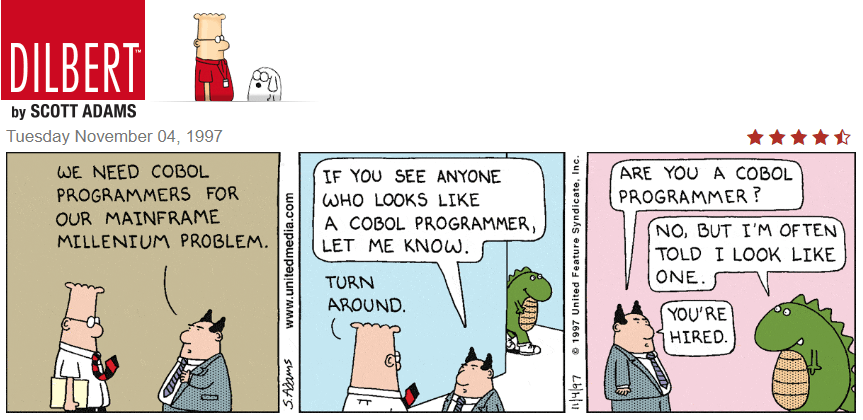 It
impacts on economics and public services, especially on social services of our countries.
We saw this in our country and now the same happens in US. Probably the same thing
happens in all countries all over the world that suffer from COVID-19.
It
impacts on economics and public services, especially on social services of our countries.
We saw this in our country and now the same happens in US. Probably the same thing
happens in all countries all over the world that suffer from COVID-19.
Usually, nowadays, such services are exposed online, but nobody expected such extreme loading of these services. And they start molder under such load. Programs start crash... and somebody has to fix them. It's just a temporary technical inconvenience when there is staff that familiar with such programs and technologies, but what about situation when programs and technologies are obsolete? When staff that may support them are about to retire due to ages, when knowledge were almost lost... It's very scary when such applications rules very important spheres of our life such social services, finances, medicine, defence etc. Something similar happened in US, so US government asked IBM about a help with their stuff written in COBOL.
Probably, in short term, they'll close the gaps, but taking in account the fact that epidemic won't dissolve in a month, there is a risk to still in the same hole... There are two ways to solve this issue in long term:
And many professionals (even those that deal with COBOL on day by day basis) think that only 2nd way is viable. Let's see what will happen... More about the issue, see here.
People compare these two technologies, and it seems an established fact is that Angular is evolutionally more advanced framework. We're not going to contradict, contrary, we agree with it, but it's better for an opinion to be grounded on facts that one can evaluate and verify.
Fortunately we got a chance to make such a comparison.
We support conversions of Cool:GEN (a legacy CASE tool with roots in 80th) to java or C#. In its time Cool:GEN allowed to greatly automate enterprise development using Mainframes as a server side and Mainframe terminals or Win32 GUIs as clients.
The legacy of this tool are probably hundreds of business and database models, milions of programs generated on COBOL on Mainframes and on C or Java on Windows and Linux. All this runs to this time in many econimic sectors.
Usually the client is some enterprise that invested a lot into design, development and support of their business model using Cool:GEN but now most such clients a trying not to lose this legacy but to convert it into something that goes in parallel with todays technologies.
As original technology is sound, so it is possible to map it to todays Java or C# on server, REST or SOAP as a transport, and Angular, AngularJS or some other on client. Such automatic conversion is an essense of our conversions efforts.
To understand a scope consider a typical enterprise client that has 2-3 thousand windows that are backed by 20-30 thousand programs.
Now, consider that the conversion is done. On output among other things we produce a clean java or C# web application with REST and SOAP interface, and Angular or AngularJS web client that encapsulates those 2-3 thousand windows.
Each window definition is rather small 5-10 KB in html form, but whole mass of windows takes 10-30 MB, which is not small any more.
For AngularJS we generate just those html templates, but for Angular we need to generate separate components for each window that includes typescript class, template and style.
While amout of generated resource for AngularJS stays in those 10-30 MB, generated Angular takes at least 5-10 MB more.
The next step is build.
AngularJS builds distribution that includes all used libraries and a set of templates, and it takes something like a minute from the CPU. Produced output is about 300 KB minified script and those 10-30 MB of templates (multiple files with 5-10 KB each one).
Angular (here we talk about version 9) builds distribution that includes all used libraries and a set of compiled components that are to be loaded lazily on demand. Without of the both angular builder that performs tree shaking build takes days. With tree shaking off it takes 40 minutes. This is the first notable difference. Produced output for ES2015 (latest javascript) is about 1 MB, and 15-100 KB per each compiled component. This is the second notable difference that already impacts end user rather than developer.
The third difference is in the end user experience. Though we have built equalvalent Angular and AngularJS frontend we observe load time of angular is higher. This cannot only be ascribed to bigger file sizes. It seems internal initialization also takes more time for Angular.
So, our experience in this particular test shows that Angular has more room to improve. In particular: compile time, bundle size, runtime speed and simplicity of dynamic loading (we have strong cases when template compilation is not the best approach).
Yesterday we run into another Saxon bug. See NPE in CaseVariants.
The problem happened just once and never reproduced. Inspection of Saxon sources hinted that it can be a race condition.
Michael Kay agreed with our conclusion and fixed the problem in the code along with several other similar places.
It is such rare kind of bug that it might appear once during whole product life cycle.
So, we may consider the fix is personal. 
We were asked to help with search service in one enterprise. We were told that their SharePoint portal does not serve their need. Main complaints were about the quality of search results.
They have decided to implement external index of SharePoint content, using Elastic, and expose custom search API within the enterprise.
We questioned their conclusions, asked why did they think Elastic will give much better results, asked did they try to figure out why SharePoint give no desired results.
Answers did not convince us though we have joined the project.
What do you think? Elastic did not help at all though they hoped very much that its query language will help to rank results in a way that matched documents will be found. After all they thought it was a problem of ranking of results.
Here we have started our analysis. We took a specific document that must be found but is never returned from search.
It turned to be well known problem, at least we dealt with closely related one in the past. There are two ingredients here:
Traditionally PDF documents are provided in a way that only distantly resembles logical structure of original content. E.g., paragraphs of texts are often represented as unrelated runs of text lines, or as set of text runs representing single words, or independant characters. No need to say that additional complication comes from that Hebrew text are often represented visually (from left to right, as if "hello" would be stored as "olleh" and would be just printed from right to left). Another common feature of PDF are custom fonts with uncanonical mappings, or images with glyphs of letters.
You can implement these tricks in other document formats but for some reason PDF is only format we have seen that regularly and intensively uses these techniques.
At this point we have realized that it's not a fault of a search engine to find the document but the feature of the PDF to expose its text to a crawler in a form that cannot be used for search. In fact, PDF cannot search by itself in such documents, as when you try to find some text in the document opened in a pdf viewer, that you clearly see in the document, you often find nothing.
A question. What should you do in this case when no any PDF text extractor can give you correct text but text is there when you looking at document in a pdf viewer?
We decided it's time to go in the direction of image recognition. Thankfully, nowdays it's a matter of available processing resources.
Our goal was:
The only small nuisance of tesseract is that it does not expose table recognition info, but we can easily overcome it (we solved this task in the past), as along with each text run tesseract exposes its position.
What are results of the run of such program?
So, what is the lesson we have taked from this experience?
Well, you should question yourself, test and verify ideas on the ground before building any theories that will lead you in completely wrong direction. After all people started to realize there was no need to claim on SharePoint, to throw it, and to spend great deal of time and money just to prove that the problem is in the different place.
A sample source code can be found at App.java
This story started half year ago when Michael Kay, author of Saxon XSLT processor, was dealing with performance in multithreaded environment. See Bug #3958.
The problem is like this.
Given XSLT:
<xsl:stylesheet exclude-result-prefixes="#all"
  version="3.0"
  xmlns:saxon="http://saxon.sf.net/"
  xmlns:xs="http://www.w3.org/2001/XMLSchema"
  xmlns:xsl="http://www.w3.org/1999/XSL/Transform">

  <xsl:output method="text" />

  <xsl:template name="main">
    <xsl:for-each saxon:threads="4" select="1 to 10">
      <xsl:choose>
        <xsl:when test=". eq 1">
          <!-- Will take 10 seconds -->
          <xsl:sequence select="
            json-doc('https://httpbin.org/delay/10')?url"/>
        </xsl:when>
        <xsl:when test=". eq 5">
          <!-- Will take 9 seconds -->
          <xsl:sequence select="
            json-doc('https://httpbin.org/delay/9')?url"/>
        </xsl:when>
        <xsl:when test=". eq 10">
          <!-- Will take 8 seconds -->
          <xsl:sequence select="
            json-doc('https://httpbin.org/delay/8')?url"/>
        </xsl:when>
      </xsl:choose>
    </xsl:for-each>
    <xsl:text>
</xsl:text>
  </xsl:template>
</xsl:stylesheet>
Implement engine to achieve best performance of parallel for-each.
Naive implementation that will distribute iterations per threads will run into unfair load on threads, so some load-balancing is required. That was the case Saxon EE.
Michael Kay has been trying to find most elegant way for the implementation and has written the comment:
I can't help feeling that the answer to this must lie in using the Streams machinery, and Spliterators in particular. I've spent another hour or so reading all about Spliterators, and I have to confess I really don't understand the paradigm. If someone can enlighten me, please go ahead...
We have decided to take the challange and to model the expected behavior using Streams. Here is our go:
import java.util.stream.IntStream;
import java.util.stream.Stream;
import java.util.function.Consumer;
import java.util.function.Function;

public class Streams
{
  public static class Item<T>
  {
    public Item(int index, T data)
    {
      this.index = index;
      this.data = data;
    }

    int index;
    T data;
  }

  public static void main(String[] args)
  {
    run(
      "Sequential",
      input(),
      Streams::action,
      Streams::output,
      true);

    run(
      "Parallel ordered",
      input().parallel(),
      Streams::action,
      Streams::output,
      true);

    run(
      "Parallel unordered",
      input().parallel(),
      Streams::action,
      Streams::output,
      false);
  }

  private static void run(
    String description,
    Stream<Item<String>> input,
    Function<Item<String>, String[]> action,
    Consumer<String[]> output,
    boolean ordered)
  {
    System.out.println(description);

    long start = System.currentTimeMillis();

    if (ordered)
    {
      input.map(action).forEachOrdered(output);
    }
    else
    {
      input.map(action).forEach(output);
    }

    long end = System.currentTimeMillis();

    System.out.println("Execution time: " + (end - start) + "ms.");
    System.out.println();
  }

  private static Stream<Item<String>> input()
  {
    return IntStream.range(0, 10).
      mapToObj(i -> new Item<String>(i + 1, "Data " + (i + 1)));
  }

  private static String[] action(Item<String> item)
  {
    switch(item.index)
    {
      case 1:
      {
        sleep(10);

        break;
      }
      case 5:
      {
        sleep(9);

        break;
      }
      case 10:
      {
        sleep(8);

        break;
      }
      default:
      {
        sleep(1);

        break;
      }
    }

    String[] result = { "data:", item.data, "index:", item.index + "" };

    return result;
  }

  private synchronized static void output(String[] value)
  {
    boolean first = true;

    for(String item: value)
    {
      if (first)
      {
        first = false;
      }
      else
      {
        System.out.print(' ');
      }

      System.out.print(item);
    }

    System.out.println();
  }

  private static void sleep(int seconds)
  {
    try
    {
      Thread.sleep(seconds * 1000);
    }
    catch(InterruptedException e)
    {
      throw new IllegalStateException(e);
    }
  }
}
We model three cases:
data: Data 1 index: 1
data: Data 2 index: 2
data: Data 3 index: 3
data: Data 4 index: 4
data: Data 5 index: 5
data: Data 6 index: 6
data: Data 7 index: 7
data: Data 8 index: 8
data: Data 9 index: 9
data: Data 10 index: 10
Execution time: 34009ms.
data: Data 1 index: 1
data: Data 2 index: 2
data: Data 3 index: 3
data: Data 4 index: 4
data: Data 5 index: 5
data: Data 6 index: 6
data: Data 7 index: 7
data: Data 8 index: 8
data: Data 9 index: 9
data: Data 10 index: 10
Execution time: 10019ms.
data: Data 6 index: 6
data: Data 2 index: 2
data: Data 4 index: 4
data: Data 3 index: 3
data: Data 9 index: 9
data: Data 7 index: 7
data: Data 8 index: 8
data: Data 5 index: 5
data: Data 10 index: 10
data: Data 1 index: 1
Execution time: 10001ms.
What we can add in conclusion is that xslt engine could try automatically decide what approach to use, as many SQL engines are doing, and not to force developer to go into low level engine details.
Recently we observed how we solved the same task in different versions of XPath: 2.0, 3.0, and 3.1.
Consider, you have a sequence $items, and you want to call some function
over each item of the sequence, and to return combined result.
In XPath 2.0 this was solved like this:
for $item in $items return
  f:func($item)
In XPath 3.0 this was solved like this:
$items!f:func(.)
And now with XPath 3.1 that defined an arrow operator => we attempted to write something as simple as:
$items=>f:func()
That is definitely not working, as it is the same as f:func($items).
Next attempt was:
$items!=>f:func()
That even does not compile.
So, finally, working expression using => looks like this:
$items!(.=>f:func())
This looks like a step back comparing to XPath 3.0 variant.
More than that, XPath grammar of arrow operator forbids the use of predictes, axis or mapping operators, so this won't compile:
$items!(.=>f:func()[1])
$items!(.=>f:func()!something)
Our conclusion is that arrow operator is rather confusing addition to XPath.
Xslt 3.0 defines a feature called streamability: a technique to write xslt code that is able to handle arbitrary sized inputs.
This contrasts with conventional xslt code (and xslt engines) where inputs are completely loaded in memory.
To make code streamable a developer should declare her code as such, and the code should pass Streamability analysis.
The goal is to define subset of xslt/xpath operations that allow to process input in one pass.
In simple case it's indeed a simple task to verify that code is streamable, but the more complex your code is the less trivial it's to witness it is streamable.
On the forums we have seen a lot of discussions, where experts were trying to figure out whether particular xslt is streamable. At times it's remarkably untrivial task!
This, in our opinion, clearly manifests that the feature is largerly failed attempt to inscribe some optimization technique into xslt spec.
The place of such optimization is in the implementation space, and not in spec. Engine had to attempt such optimization and fallback to the traditional implementation.
The last such example is: Getting SXST0060 "No streamable path found in expression" when trying to push a map with grounded nodes to a template of a streamable mode, where both xslt code and engine developers are not sure that the code is streamable in the first place.
By the way, besides streamability there is other optimization technique that works probably in all SQL engines. When data does not fit into memory engine may spill it on disk. Thus trading memory pressure for disk access. So, why didn't such techninque find the way into the Xslt or SQL specs?
Saxon 9.9.0-1 is out!
Shortly we have reported our first bug in the new version. See https://saxonica.plan.io/issues/3923.
After 17 years of experience we still run into dummy bugs in xslt (xpath in fact).
The latest one is related to order of nodes produced by ancestor-or-self axis.
Consider the code:
<xsl:stylesheet version="3.0"
  xmlns:xsl="http://www.w3.org/1999/XSL/Transform"
  xmlns:xs="http://www.w3.org/2001/XMLSchema">

  <xsl:template match="/">
    <xsl:variable name="data" as="element()">
      <a>
        <b>
          <c/>
        </b>
      </a>
    </xsl:variable>

    <xsl:variable name="item" as="element()" select="($data//c)[1]"/>

    <xsl:message select="$item!ancestor-or-self::*!local-name()"/>
    <xsl:message select="$item!local-name(), $item!..!local-name(), $item!..!..!local-name()"/>
  </xsl:template>

</xsl:stylesheet>
We expected to have the following outcome
c b a
c b a
But correct one is
a b c
c b a
Here is why:
ancestor-or-self::*is an AxisStep. From XPath §3.3.2:
[Definition: An axis step returns a sequence of nodes that are reachable from the context node via a specified axis. Such a step has two parts: an axis, which defines the "direction of movement" for the step, and a node test, which selects nodes based on their kind, name, and/or type annotation.] If the context item is a node, an axis step returns a sequence of zero or more nodes; otherwise, a type error is raised [err:XPTY0020]. The resulting node sequence is returned in document order.
For some reason we were thinking that reverse axis produces result in reverse order. It turns out the reverse order is only within predicate of such axis.
See more at https://saxonica.plan.io/boards/3/topics/7312
XPath 3 has introduced a syntactic sugar for a string concatenation, so following:
concat($a, $b)
can be now written as:
$a || $b
This is nice addition, except when you run into a trouble. Being rooted in C world we unintentionally have written a following xslt code:
<xsl:if test="$a || $b">
...
</xsl:if>
Clearly, we intended to write $a or $b. In contrast $a || $b is
evaluated as concat($a, $b). If both variables are false() we
get 'falsefalse' outcome, which has effective boolean value true().
This means that test condition of xsl:if is always true().
What can be done to avoid such unfortunate typo, which is manifested in no way neither during compilation nor during runtime?
The answer is to issue informational message during the compilation, e.g. if result of || operator is converted to a boolean, and if its arguments are booleans also then chances are high this is typo, and not intentional expression.
We adviced to implement such message in the saxon processor (see https://saxonica.plan.io/boards/3/topics/7305).
It seems we've found discrepancy in regex implementation during the transformation in Saxon. Consider the following xslt:
<xsl:stylesheet version="3.0"
xmlns:xsl="http://www.w3.org/1999/XSL/Transform"
xmlns:xs="http://www.w3.org/2001/XMLSchema">
<xsl:template match="/">
<xsl:variable name="text" as="xs:string"
select="'A = "a" OR B = "b"'"/>
<xsl:analyze-string regex=""(\\"|.)*?"" select="$text">
<xsl:matching-substring>
<xsl:message>
<xsl:sequence select="regex-group(0)"/>
</xsl:message>
</xsl:matching-substring>
</xsl:analyze-string>
</xsl:template>
</xsl:stylesheet>
vs javascript <html>
<body>
<script>
var text = 'A = "a" OR B = "b"';
var regex = /"(\\"|.)*?"/;
var match = text.match(regex);
alert(match[0]);
</script>
</body>
</html>xslt produces: "a" OR B = "b"
while javascript: "a"
What is interesting is that we're certain this was working correctly in Saxon several years ago.
You can track progress of the bug at: https://saxonica.plan.io/boards/3/topics/7300 and at https://saxonica.plan.io/issues/3902.
For more than 25 years continues a discussion in C++ community about exceptions. In our opinion this can only be compared with math community and their open problems like Hilbert's 23 problems dated by 1900.
In essence C++ exception discussion is about efficiency of exceptions vs status codes. This problem is not so acute in other languages (like java or C#) because those languages postulate different goals.
C++ designers have introduced a zero-overhead principle for any language feature, which is:
Exceptions comparing to status codes do not withstand this demand. This led to the fragmentation of C++ comunity where many big projects and code styles ban exceptions partially or completely.
Make no doubt that all this time people were trying to make exceptions better, and have found techniques to make them space and run time efficient to some extent, but still, old plain status codes outperform both in speed (especially in predictability of time of exception handling logic) and in code size.
We guess the solution is finally found after the quarter the century of discussion!
WG paper: Zero-overhead deterministic exceptions: Throwing values by Herb Sutter. This "paper aims to extend C++’s exception model to let functions declare that they throw a statically specified type by value. This lets the exception handling implementation be exactly as efficient and deterministic as a local return by value, with zero dynamic or non-local overheads."
In other words author suggests to:
Here are author's arguments:
if or switch statements.
What aurhor suggests might seem too radical but at present it's only viable solution to reestablish zero-verhead principle and to reunite two C++ camps.
Here is the approach.
Are contract violation like invalid values of arguments or invalid post conditions (unhold invariants) are exceptions or programmer's bugs?
If later then it's best to terminate, as you cannot correctly recover from bug.
What user program can do with stack overflow?
The best according to the author it to terminate.
What is the best way to deal with OOM dyring dynamic allocation.
At present there are two operators:
new - to allocate memory dynamically and throw bad_alloc on
failure.new(nothrow) - to allocate memory dynamically and return nullptr on
failure.
Herb Sutter suggests to change new behavior to terminate on failure (it
is very hard to properly handle bad_alloc anyway), while new(nothrow) will
still allow to build code that can deal with OOM.
This should never be reported as an error, and status codes should be used to report the state.
This is where exceptions should be used.
Statistics shows that with such separation more than 90% of what curently is an exception will not be exception any more, so no any hidden exception logic is required: program either works or terminates.
Redefine what exception object is and how it is propagated.
It should be thin value type. At minimum it needs to contain an error code. Suggested size is up to a couple of pointers.
Compiler should be able to cheaply allocate and copy it on the stack or even in the processor's registers.
Such simple exception type resolves problems with lifetime of exception object, and makes exception handling as light as checking status codes.
Exception should be propagated through return chanel, so it's like a new calling convention that defines either function result or error outcome.
It's not our intention to quote whole the paper here. If you're interested then please read it. Here we want to outline our concerns.
This paper emphasizes that exception type should be small.
So, what to do with exception payload, if any (at least error message if it's not a static text)?
If this won't be resolved then developers will start to invent custom mechanisms like GetLastErrorMessage().
And what to do with aggregate exceptions?
We think this must be clearly addressed.
We can accept that most of the current exceptions will terminate.
But consider now some container that serves requests, like web container or database.
It may be built from multiple components and serve multiple requests concurently. If one request will terminate we don't want for container to terminate.
If terminate handler is called then we cannot rely on state of the application. At least we can expect heap leaks and un-released resources.
So, we either want to be able release heap and other resources per request, or we want to go down with whole process and let OS deal with it.
In the later case we need to design such containers differently: as a set of cooperative processes; OS should allow to spin processes more easily.
There are Virtual Machines that allow exception to be thrown on each instruction (like JVM, or CLI).
You cannot tell in this case that code would never throw exception, as it can out of the blue!
Event in x86 you can have PAGE FAULT on memory access, which can be translated into an exception.
So, it's still a question whether the terminate() solution is sound in every case, and whether compiler can optimize out exception handling if it proves staticlly that no exception should be thrown.
In some code we needed to perform a circular shift of a part of array, like on the following picture:

It's clear what to do, especially in case of one element shift but think about "optimal" algorithm that does minimal number of data movemenents.
Here is what we have came up with in C#: algorithm doing single pass over data.
/// <summary>
/// <para>
/// Moves content of list within open range <code>[start, end)</code>.
/// <code>to</code> should belong to that range.
/// </para>
/// <para>
/// <code>list[start + (to - start + i) mod (end - start)] =
/// list[start + i]</code>,
/// where i in range<code>[0, end - start)</ code >.
/// </para>
/// </summary>
/// <typeparam name="T">An element type.</typeparam>
/// <param name="list">A list to move data withing.</param>
/// <param name="start">Start position, including.</param>
/// <param name="end">End position, not incuding.</param>
/// <param name="to">Target position.</param>
public static void CircularMove<T>(IList<T> list, int start, int end, int to)
{
  var size = end - start;
  var step = to - start;
  var anchor = start;
  var pos = start;
  var item = list[pos];

  for(int i = 0; i < size; ++i)
  {
    pos += step;

    if (pos >= end)
    {
      pos -= size;
    }

    var next = list[pos];

    list[pos] = item;
    item = next;

    if (pos == anchor)
    {
      pos = ++anchor;

      if (pos >= end)
      {
        break;
      }

      item = list[pos];
    }
  }
}
We often deal with different SQL DBs, and in particular DB2, Oracle, and SQL Server, and this is what we have found lately.
Our client has reported a problem with SQL insert into the DB2:
The prototype table is like this:
create table Link(FromID int, ToID int, primary key(FromID, ToID));
DB2 SQL insert is like this:
insert into Link(FromID, ToID)
values(1, 2)
except
select FromID, ToID from Link;
The idea is to have empty row set to insert if there is a duplicate.
SQL Server variant looks like this:
insert into Link(FromID, ToID)
select 1, 2
except
select FromID, ToID from Link;
Client reported ridiculously slow performance of this SQL, due to table scan to calculate
results of except operator.
Out of interest we performed the same experiment with SQL Server, and found the execution plan is optimal, and index seek is used to check duplicates. See:

The only reasonable way of dealing with such DB2's peculiarity, except trying
to insert and handle duplicate exception, was to qualify select with where clause:
insert into Link(FromID, ToID)
values(1, 2)
except
select FromID, ToID from Link where FromID = 1 and ToID = 2;
We think DB2 could do better.
We've run into following java function that models some variation of NULL arithmetic:
public static Long add(Long value1, Long value2)
{
  return value1 == null ? value2 : value2 == null ? value1 : value1 + value2;
}
When this function runs the outcome is different from what we have expected.
Here is a quiz:
What is outcome of add(1, 2):
3;null;
What is outcome of add(3, null):
3;null;
What is outcome of add(null, 4):
null;4;
What is outcome of add(null, null):
null;0;Our assumptions were:
add(1, 2) == 3;add(3, null) == 3;add(null, 4) == 4;add(null, null) == null;Java works differently:
add(1, 2) == 3;add(3, null) throws NullPointerException;add(null, 4) throws NullPointerException;add(null, null) throws NullPointerException;
The problem is with compile time type of ternary ?: operator. Compiler
decides it's long, while we intuitively expected Long. Java
casts null to long (which results into NPE),
and then to Long.
Correct code would be:
public static Long add(Long value1, Long value2)
{
  if (value1 == null)
  {
    return value2;
  }
  else if (value2 == null)
  {
    return value;
  }
  else
  {
    return value1 + value2;
  }
}
This version does not cast anything to long, and works as we originally
expected.
Honestly, we're a bit anexious about this subtle difference of if-then-else and ?: operator.
Don't you think there is something wrong with world map according to Yandex?

They seems have optimized something in Black Sea region.
Today we wanted to write some code in java that performs some or the other action depending on a condition. At the same time if some action fails we wanted to fall back to the other action.
We've written it like this:
switch(boolean_expression)
{
  case true:
  {
    try
    {
      // Some actions.
      break;
    }
    catch(Exception e)
    {
      // Fall back to false route.
    }
  }
  case false:
  {
    // Other actions.
    break;
  }
}
The fun part is that it's not valid java code.
Why?
The answer can be found in spec: 14.11.
The switch Statement
The type of the Expression must bechar,byte,short,int,Character,Byte,Short,Integer,String, or an enum type (§8.9), or a compile-time error occurs.
But why?
Who knows...
Sure there are workarounds, even with switch, but it just not justified restriction...
Saxon-HE 9.8.0-3 is out but still problems are there.
See Incorrect behavior in Saxon-HE-9.8.0-3 (maven).
Another problem is that we see that something has propably happened with tail call optimization. Code that was working earlier now give an error:
err:SXLM0001: Too many nested function calls. May be due to infinite recursion.
We have to figure out how to build a simple TC for Michael Kay to test it.
See Saxon-HE 9.8.0-3 Tail Calls.
We've found that there is a Saxon HE update that was going to fix problems we mentioned in the previous post, and decided to give it a second chance.
Now Saxon fails with two other errors:
We shall be waiting for the fixes. Mean time we're back to version 9.7.
We have found that Saxon HE 9.7.0-18 has finally exposed partial support to map and array item types. So, now you can encapsulate your data in sequence rather than having a single sequence and treating odd and even elements specially.
Basic example is:
<xsl:stylesheet version="3.0"
  xmlns:xsl="http://www.w3.org/1999/XSL/Transform"
  xmlns:xs="http://www.w3.org/2001/XMLSchema"
  xmlns:t="t"
  xmlns:map="http://www.w3.org/2005/xpath-functions/map"
  exclude-result-prefixes="xs t map">

  <xsl:template match="/">
    <xsl:variable name="map" as="map(xs:string, xs:string)" select="
      map
      {
        'Su': 'Sunday',
        'Mo': 'Monday',
        'Tu': 'Tuesday',
        'We': 'Wednesday',
        'Th': 'Thursday',
        'Fr': 'Friday',
        'Sa': 'Saturday'
      }"/>

     <xsl:message select="map:keys($map)"/>
  </xsl:template>

</xsl:stylesheet>
A list of map functions can be found here http://www.w3.org/2005/xpath-functions/map/, though not all are available, as Saxon HE still does not allow inline functions.
P.S. From the development perspective it's a great harm that Saxon HE is so limited. Basically limited to xslt 2.0 + some selected parts of 3.0.
Lately we do not program in XSLT too often but rather in java, C#, SQL and javascript, but from time to time we have tasks in XSLT.
People claim that those languages are too different and use this argument to explain why XSLT is only a niche language. We, on the other hand, often spot similarities between them.
So, what it is in other languages that is implemented as tunnel parameters in XSLT?
To get an answer we reiterated how they work in XSLT, so, you:
tunnel="yes";tunnel="yes";The important difference of regular template parameters from tunnel parameters is that the tunnel parameters are implicitly passed down the call chain of templates. This means that you:
As a result we have a template with some parameters passed explicitly, and some others are receiving values from somewhere, usually not from direct caller. It’s possible to say that these tunnel parameters are injected into a template call. This resembles a lot injection API in other languages where you configure that some parameters are prepared for you by some container rather then by direct caller.
Now, when we have expressed this idea it seems so obvious but before we thought of this we did not realize that tunnel parameters in XSLT and Dependency Injection in other languages are the same thing.
Recently we have found and fixed a bug in unreachable statement optimization in jxom.
Latest version of stylesheets can be found at github.com languages-xom.
While reading on ASP.NET Core Session, and analyzing the difference with previous version of ASP.NET we bumped into a problem...
At Managing Application State they note:
Session is non-locking, so if two requests both attempt to modify the contents of session, the last one will win. Further, Session is implemented as a coherent session, which means that all of the contents are stored together. This means that if two requests are modifying different parts of the session (different keys), they may still impact each other.
This is different from previous versions of ASP.NET where session was blocking, which meant that if you had multiple concurrent requests to the session, then all requests were synchronized. So, you could keep consistent state.
In ASP.NET Core you have no built-in means to keep a consistent state of the session. Even assurances that the session is coherent does not help in any way.
You options are:
Good bad and good news.
12 May 2016
Saxon 9.7.0.5 maintenance release for Java and .NET.
See Bug #2770
"We tend to do a new maintenance release every 4-6 weeks. Can't commit to firm dates."
Visitor pattern is often used to separate operation from object graph it operates with. Here we assume that the reader is familiar with the subject.
The idea is like this:
Visitor.Visitor defines methods for each type of object in the graph, which a
called during traversing of the graph.Traverser,
or by the Visitor or by each object type in the graph.Implementation should collect, aggregate or perform other actions during visit of objects in the graph, so that at the end of the visit the purpose of operation will be complete.
Such implementation is push-like: you create operation object and call a method that gets object graph on input and returns operation result on output.
In the past we often dealt with big graphs (usually these are virtual graphs backended at database or at a file system).
Also having a strong experience in the XSLT we see that the visitor pattern in OOP
is directly mapped into xsl:template and xsl:apply-templates technique.
Another thought was that in XML processing there are two camps:
As with SAX vs XML Reader or, more generally, push vs pull processing models, there is no the best one. One or the other is preferable in particular circumstances. E.g. Pull like component fits into a transformation pipeline where one pull component has another as its source; another example is when one needs to process two sources at once, which is untrivial with push like model. On the other hand push processing fits better into Reduce part of MapReduce pattern where you need to accumulate results from source.
So, our idea was to complete classic push-like visitor pattern with an example of pull-like implementation.
For the demostration we have selected Java language, and a simplest boolean expression calculator.
Please follow GitHub nesterovsky-bros/VisitorPattern to see the detailed explanation.